Captain Ahab and Moby Dick: A Study in the Self and the Other
Version: 5 (current) | Updated: 10/31/2025, 6:52:16 PM
Added description
Description
Box 4 – A Multimodal Collection of Literary Scholarship, Historical Correspondence, and Archival Records
Overview
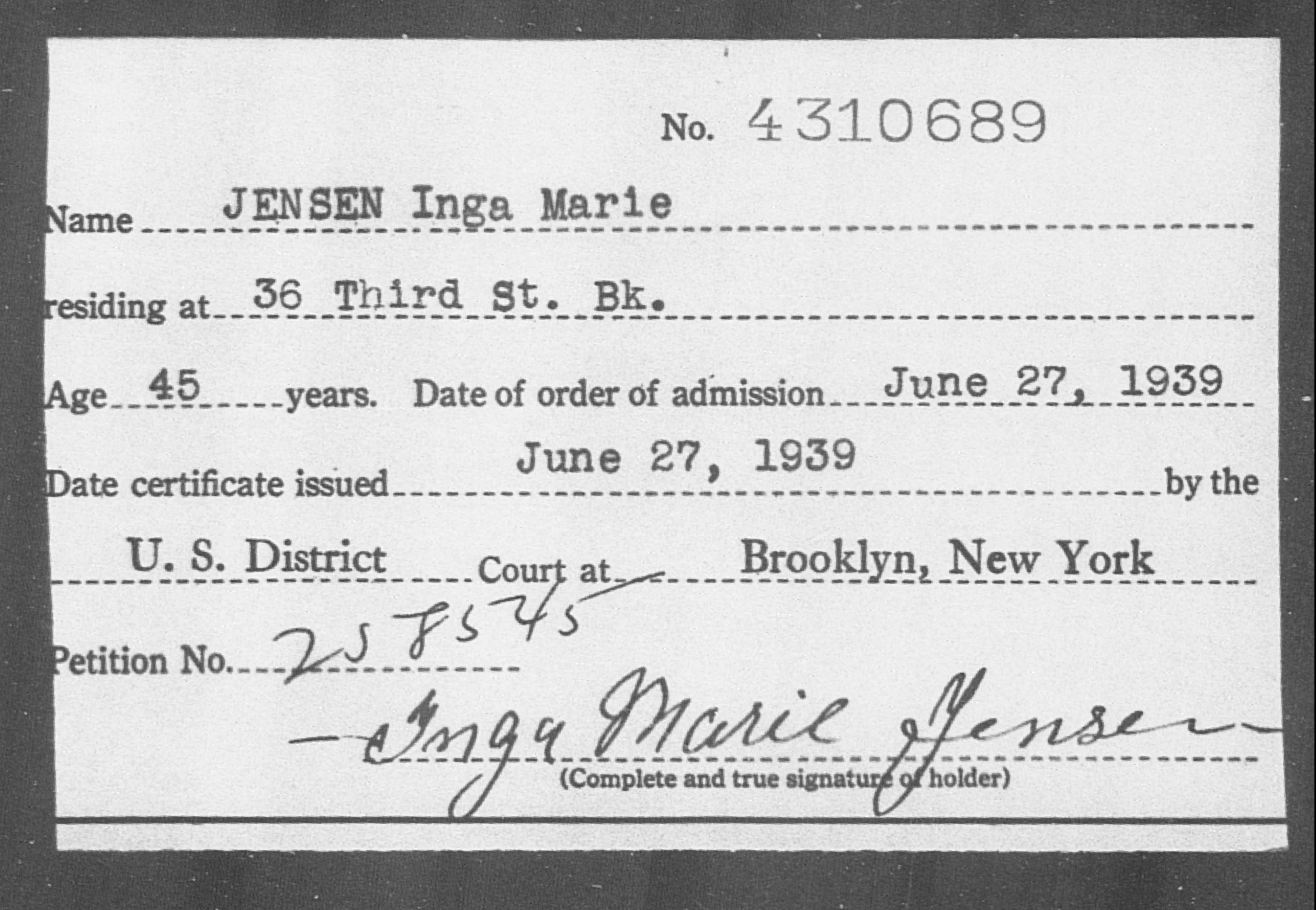
Box 4 contains eight distinct items that together weave a narrative about American literary criticism, mid‑20th‑century political correspondence, and early‑20th‑century civic documentation. The collection is a blend of scholarly text, digitised images, and web‑based resources, offering a snapshot of how digital archives bring together disparate media into a coherent research context.| Item | Format | Key Content | |------|--------|-------------| | 1 | PDF/HTML | Academic paper on Moby‑Dick (1997) | | 2 | WebP image | Modern illustration (size 125 kB) | | 3 | Web page | Faculty profile at Georgetown | | 4 | JPEG image | 1951 letter to President Truman (OCR excerpt) | | 5 | JPEG image | 1939 pet‑index record (OCR excerpt) | | 6 | HTML | Chapter 4 of Moby‑Dick (online edition) | | 7 | JPEG image | Stanford University Press book cover | | 8 | PNG image | 1892 trade‑agreement document (OCR excerpt) |
The items span more than a century of American history, from the 19th‑century trade guilds to the 1950s Cold‑War politics, and culminate in a 1997 scholarly reflection on Herman Melville’s classic. Together they illustrate how digital humanities projects can juxtapose literary analysis with primary source material, offering a richer, multi‑layered research experience.
---
1. Literary Scholarship
Paper: Captain Ahab and Moby Dick: A Study in the Self and the Other
- Author: Cleveland Lawrence III
- Institution: Georgetown University
- Date: 2 May 1997
- Subjects: Literary Criticism, Moby‑Dick, Herman Melville, American Literary Traditions, Self & Other
- Summary: The paper dissects Melville’s novel through the lens of identity and otherness, focusing on key relationships (Ishmael‑Queequeg, Christians‑pagans, Ahab‑Starbuck). It situates the novel within broader American literary traditions and explores the psychological dynamics that drive the narrative.
- Chapter 4 – “The Counterpane” (online HTML) – provides direct access to the text discussed in the paper.
- Stanford University Press cover – a visual representation of a contemporary edition of Moby‑Dick, underscoring the continued relevance of Melville’s work.
Supporting Material:
---
2. Digital Images
| Image | Description | OCR / Metadata | |-------|-------------|----------------| | Modern illustration | A contemporary WebP image (125 kB) | No OCR; placeholder URL | | Letter to President Truman | 1951 correspondence from a private citizen to the U.S. President | OCR excerpt: “April 21 1951… Mr. Harry S. Truman… Washington DC… I am not numbered among those who wrote letters of condemnation following your ‘firing’ of General MacArthur.” | | Pet‑index record | 1939 Brooklyn court record for Inga Marie Jensen | OCR excerpt: “No. 4310689… Age 45… Date of order of admission June 27 1939.” | | Trade‑agreement document | 1892 archival document on merchant guild trade agreements | OCR excerpt: “This text was extracted using high‑accuracy external OCR tool. Contains archival document from 1892 regarding trade agreements between merchant guilds.” |
These images provide tangible evidence of the historical contexts referenced in the scholarly paper and the broader collection. The letter to Truman offers insight into civilian political engagement during the early Cold War, while the pet‑index record reflects everyday civic processes in 1930s New York. The 1892 trade‑agreement document connects to the economic history of merchant guilds, adding depth to the collection’s temporal range.
---
3. Web Resources
| URL | Purpose | |-----|---------| | https://faculty.georgetown.edu/bassr/218/projects/lawrence/lawrence.htm | Faculty profile of Cleveland Lawrence III, providing academic context for the paper. | | https://melville.electroniclibrary.org/editions/versions-of-moby-dick/4-the-counterpane | Online edition of Moby‑Dick Chapter 4, enabling direct textual comparison. |
These links anchor the collection in its digital ecosystem, allowing researchers to trace the author’s scholarly trajectory and to access primary literary material.
---
4. Themes & Connections
| Theme | Related Items | |-------|---------------| | Self & Other | Paper (1997), Chapter 4 (online), Stanford cover | | Political Correspondence | Letter to Truman (1951) | | Civic Documentation | Pet‑index record (1939), Trade‑agreement (1892) | | Digital Humanities | Mixed media (text, images, web links) |
The juxtaposition of literary criticism with primary documents illustrates how digital archives can contextualise scholarly work within its historical milieu. The collection demonstrates the value of cross‑disciplinary research, linking literary analysis to political history and civic records.
---
5. Conclusion
Box 4 is a compact yet richly layered archive that showcases the intersection of literary scholarship, political history, and civic documentation. Its diverse media types—textual analysis, digitised images, and web resources—offer a multifaceted view of American cultural and historical narratives. Researchers can use this collection to explore how literary themes resonate across time, how individual voices engage with national politics, and how everyday records reflect broader societal structures.
---
```json { "collection_title": "Box 4 – Multimodal Collection of Literary Scholarship, Historical Correspondence, and Archival Records", "description": "A curated set of eight items spanning literary criticism, political correspondence, and civic documentation from the 19th to the late 20th century.", "date_range": "1892–1997", "languages": ["en-US"], "items": [ { "id": "01K8XSRK7Q53VK2B370KCRQQY8", "title": "Captain Ahab and Moby Dick: A Study in the Self and the Other", "type": "Text", "creator": "Cleveland Lawrence III", "institution": "Georgetown University", "created": "1997-05-02", "language": "en-US", "subjects": [ "Literary Criticism", "Moby Dick", "Herman Melville", "American Literary Traditions", "Self and Other" ], "description": "Academic paper analyzing Herman Melville's Moby Dick through the lens of the self and the other.", "access_url": "PLACEHOLDER", "source": "PINAX", "rights": "", "place": [] }, { "id": "image-001", "title": "Modern Illustration", "type": "image/webp", "size_kb": 125, "url": "https://example.com/modern-image.webp", "description": "Contemporary illustration
Entities
(loading...)
Entity Relationships
(loading...)
Metadata
Files (6)
OCR Text
110 Kensington Drive Madison 4 Wis Apr 21 - 1951 Mr. Harry S. Truman President of The U.S. Washington DC Dear Mr. President: I am not numbered among those who wrote letters of condemnation following your "firing" of General MacArthur. I wanted to wait until the situation became more clarified. Part of the clarification came after listening to your Jackson Dinner speech—a childlike speech if I ever heard one. Then I heard the masterful speech of General MacArthur and the various discussions which followed. I am a former Democrat but apologize for it. From what I have read and
OCR Text
This text was extracted using high-accuracy external OCR tool. Contains archival document from 1892 regarding trade agreements between merchant guilds.
Version History (5 versions)
- ✓ v5 (current) · 10/31/2025, 6:52:16 PM
"Added description" - v4 · 10/31/2025, 6:51:31 PM · View this version
"Added PINAX metadata" - v3 · 10/31/2025, 6:51:20 PM · View this version
"Added OCR to arke-asset.jpg.ref.json" - v2 · 10/31/2025, 6:50:57 PM · View this version
"Set parent to 01K8XSQEYFPF2MXKZ3VJK3VY80" - v1 · 10/31/2025, 6:50:55 PM · View this version
"Initial snapshot"
Additional Components
Captain Ahab and Moby Dick_ A Study in the Self and the Other.html
<html><head><title>Captain Ahab and Moby Dick: A Study in the Self and the Other</title></head><body bgcolor="#FFFFFF">
<blockquote>
Cleveland Lawrence III<br>
May 2, 1997<br>
American Literary Traditions<br>
Professor Bass<br>


<h3>Captain Ahab and Moby Dick: A Study in the Self and the Other</h3><p>
	Literary critics point to a variety of themes and juxtapositions
when analyzing Herman Melville's Moby Dick.  Some mention man versus
nature or good versus evil.  Others see the land opposed to the sea or
Fate opposed to free will.  A perspective that seems to be overlooked at
times is the interesting dichotomy of the self and the other.  There are
many such relationships throughout the book, such as that of Ishmael and
Queequeg, along with Christians and pagans and Ahab and Starbuck, but this
paper will focus on the central relationship, namely, Ahab and Moby-Dick.  <p>
	What is the relationship of the self and the other?  Why is it
applicable to Melville's classic?  Tzvetan Todorov provides an answer in
the book, The Conquest of America: The Question of the Other.  On page 3
the reader is told: "We can discover the other in ourselves, realize we
are not a homogenous substance, radically alien to whatever is not us . .
. This group [the other] in turn can be interior to society or it can be
exterior to society."  It seems, then, that the other does not have to be
very foreign.  Arguably, the other cannot be very foreign, as the other is
"in ourselves".  More appropriately, the other can only be as foreign as
we are foreign.  The other resides within the self. <p>
	Julia Kristeva, in Strangers to Ourselves, elaborates on this
point.  On page one she writes: "The foreigner lives within us: he is the
hidden face of our identity, the space that wrecks our abode, the time in
which understanding and affinity founder.  By recognizing him within
ourselves, we are spared detesting him in himself . . . The foreigner
comes in when the conscious of my difference arises, and he disappears
when all acknowledge ourselves as foreigners."  Captain Ahab struggled to
see Moby-Dick within himself.  Herein began the book's main problem of the
self and the other.<p>
	The early chapters of the book refer to Ahab having lost his leg
to Moby-Dick.  If any character development had taken place, it would
suggest that Ahab was the victim of an attack by a vicious animal.  By the
time the reader gets to "Chapter 36 The Quarter Deck", however, Ahab is
being established as a man obsessed--obsessed with destroying Moby-Dick.
By "Chapter 37 Sunset", it is clear that Ahab is mad.  In "Chapter 44 The
Chart", the reader is made aware of Ahab's "monomaniac thought of his
soul."  He was so consumed by Moby-Dick that he could not sleep.  <p>
	What about Moby-Dick?  Ahab seems to have some cause for his
feelings toward the whale.  It seems plausible that he and most other
sailors had been exposed to the story of Jonah, which may have, for them,
established man and whale as enemies.  Edward F. Edinger, in Melville's
Moby-Dick: A Jungian Commentary, says that "Moby-Dick is described as the
incarnation of evil . . . hence, Moby-Dick is called Ethe gliding great
demon of the seas of life' (Chapter 41), and it is remarked that Ethough
in many of its aspects this visible world seems formed in love, the
invisible spheres were formed in fright' (Chapter 42)" (p. 84).  Melville
tells the reader in "Chapter 54 The Town-Ho's Story" of another account of
Moby-Dick's capabilities.  In this story, Moby-Dick snatches Radney from
his ship and takes him below the ocean surface.  Interestingly, Ahab does
not hear this story.  Melville may want to show that the whale can be
violent, but does not want to allow Ahab to have such information as an
excuse for his monomania.  By telling only the reader of the Town Ho's
story, both Ahab and Moby-Dick are developed further.  The whale is set up
as a force to be reckoned with, and Ahab is set up as a crazed man, who,
despite extensive knowledge of the whale's actions, fills in the blanks,
so to speak.  In essence, Ahab makes Moby-Dick what he is.<p>
	After these chapters, many chapters of the book go by with little
mention of either Ahab or Moby-Dick.  Then, in "Chapter 99 The Doubloon",
Ahab's monomania is revisited.  He still has not had an opportunity to
destroy the whale, and offers the expensive coin--worth nine hundred and
sixty cigars-- to any of his crew who can.  In the next chapter, Ahab is
confronted with Enderby, the symbol for rationality, but he refuses to
listen.  Again, Melville shows that Ahab is totally consumed, but that
Moby-Dick is also a ruthless beast, as Enderby lost an arm to him. Enderby
does not feel the same rage that Ahab does.  Enderby has comes to terms
with Moby-Dick and his experience with him.  He did not fill in the
blanks, as Ahab had done.  <p>
	Kenneth J. Atchity, in Masterplots, noted that Moby-Dick did
symbolize evil, but that Ahab's obsession to kill Moby-Dick was evil as
well (pgs. 3994-3996).  This harkens back to the words of Todorov and
Kristeva, who both say that there is very little distance between the self
and the other.  Again, it seems evident that the other resides within the
self.  The evil that Moby-Dick appears to have is the evil within Captain
Ahab.  Ahab projects his own feelings and instincts onto Moby-Dick, as it
is too difficult for him to accept himself as he is. <p>
	To that extent, the stigma of Moby-Dick was created, to some
degree, by Captain Ahab.  Rene Girard said that "despite what is said
around us, persecutors are never obsessed with difference but rather by
its unutterable contrary, the lack of difference" (The Scapegoat, p. 22).
This lack of difference is dominant in Ahab's relationship to the whale.
While Ahab may try to establish himself as a hero, he too, deep down, is
evil.  It is this sameness that is problematic.  When it becomes too
obvious that the other is no different from the self, the other becomes a
scapegoat of sorts.  For example, the Nazis were unhappy with a variety of
things relating to their quality of life.  The Jews engaged in numerous
religious practices that were thought to be very different.  The Jews were
hated for this "difference".  It soon became evident, though, that the
Jews, as people were no different than the Nazis.  Therefore, projections
and creation were needed.  The Germans were reminded that the Jews were
often somewhat ridiculously blamed for the Black Death, and it was even
asserted that the Jews were an inferior race of people that would destroy
humanity if they were allowed to reproduce, especially with non-Jews.  The
solution--the Jews would have to be exterminated, just like any other germ
or virus.  Thus, the Jews were made into a scapegoat for much greater
fears, concerns, and insecurities.   <p>
	The  Edinger speaks to this point, saying: "Resentment accumulates
which must have some object.  In such a case, a scapegoat mechanism is
likely to take over.  Thus it was with Ahab" (p. 86).  Ahab created
"Moby-Dick" as the object toward which to direct his hate.  Some might say
that the whale serves as a fetish object.  Sigmund Freud introduced the
notion of fetish objects.  He said that people who have undergone
traumatic experiences often use fetish objects to function normally.
Fetishes usually are manifested sexually, as people have trouble
expressing their sexuality and need the fetish object to substitute for
them.  The fetish keeps their sexuality alive.  Of course, in Ahab's case,
there was no sexual fetish object.  Moby-Dick did, however, serve as an
object of self-preservation.  Ahab's identity as Moby-Dick's enemy was
kept intact.  Ahab needed to create Moby-Dick for his own sake.  <p>
	Ahab had to "create" Moby-Dick in order to justify his own hatred
and tendency toward evil.  Furthermore, Moby-Dick had to be made into a
formidable opponent, so as to explain Ahab's failed attempts at destroying
it.  By creating Moby-Dick in this manner, Ahab created himself.  The self
and the other are inextricably linked, such as is the case in a master and
slave relationship.  There can be no slave without a master and there can
be no master without a slave.  When a master conquers and creates a slave,
the master creates a role as "master" for himself or herself as well.  In
Melville's book, Ahab played the role of hunter and Moby-Dick became the
hunted.  <p>
	The self/other relationship can be far more complicated than what
has been presented here.  Many racists, sexists and those who cannot
tolerate homosexuality do not always abide by the norms of the system.
Ahab and Moby-Dick are a special case of the relationship, and they are
one that deserve consideration.
</blockquote><p>
</body></html>
README.md
# Reference File Test Cases

This directory contains various `.ref.json` files to test edge cases and validation logic.

## Test Cases

### 1. `1259.jpg.ref.json` ✅
**Edge Case**: Complete ref with all fields, proper naming convention
- URL: NARA microfilm archive image
- Has: `url`, `type`, `size`, `filename`
- Filename matches type: `.jpg.ref.json` with `type: image/jpeg`
- **Expected**: No warnings, will be OCR'd

### 2. `moby-dick-counterpane.ref.json` ✅
**Edge Case**: HTML webpage reference
- URL: Electronic text edition of Moby Dick
- Has: `url`, `type`, `filename`
- Type: `text/html` (not OCR-processable)
- **Expected**: No warnings (HTML not in OCR types)

### 3. `arke-asset.jpg.ref.json` ✅
**Edge Case**: Minimal fields with proper naming
- URL: Arke CDN asset
- Has: `url`, `type` only (no size or filename)
- Filename matches type: `.jpg.ref.json` with `type: image/jpeg`
- **Expected**: No warnings, will be OCR'd

### 4. `stanford-book-cover.ref.json` ⚠️
**Edge Case**: OCR-processable type but filename doesn't match
- URL: Next.js image proxy with query params
- Has: `url`, `type` only
- Type: `image/jpeg` but filename doesn't include `.jpg`
- **Expected**: Warning about OCR processing (won't be OCR'd due to filename)

### 5. `georgetown-lawrence.ref.json` ⚠️
**Edge Case**: Minimal - only URL field
- URL: HTML page about D.H. Lawrence
- Has: `url` only (no type field)
- **Expected**: Warning about missing type field (still proceeds)

### 6. `pre-ocr-scan.png.ref.json` ✅
**Edge Case**: Pre-existing OCR text
- URL: Example historical document
- Has: `url`, `type`, `size`, `filename`, `ocr`
- Contains pre-extracted OCR text
- Filename matches type: `.png.ref.json` with `type: image/png`
- **Expected**: No warnings, OCR will be skipped (already has OCR)

### 7. `webp-no-extension.ref.json` ⚠️
**Edge Case**: WebP without extension in filename
- URL: Example modern image
- Has: `url`, `type`, `size`
- Type: `image/webp` but filename doesn't include `.webp`
- **Expected**: Warning about OCR processing (won't be OCR'd due to filename)

## Expected Scan Output

```
✔ Found 7 files
⚠️ georgetown-lawrence.ref.json: Missing 'type' field (optional but recommended)
⚠️ stanford-book-cover.ref.json: Type is 'image/jpeg' but filename doesn't include '.jpg.ref.json' pattern...
⚠️ webp-no-extension.ref.json: Type is 'image/webp' but filename doesn't include '.webp.ref.json' pattern...
```

## Testing

```bash
npm run dev upload ./example_dirs/test_dir --uploader "Test User" --dry-run --debug
```
Parent
No children (leaf entity)